
Approach AI Factory Services Industries About
Talk to us Take the Readiness Check
Service 03

Give AI an owner, a team and a rhythm.

We design how AI gets done in your organization: the squads, roles, decision rights and governance rhythm that turn scattered pilots into steady delivery.

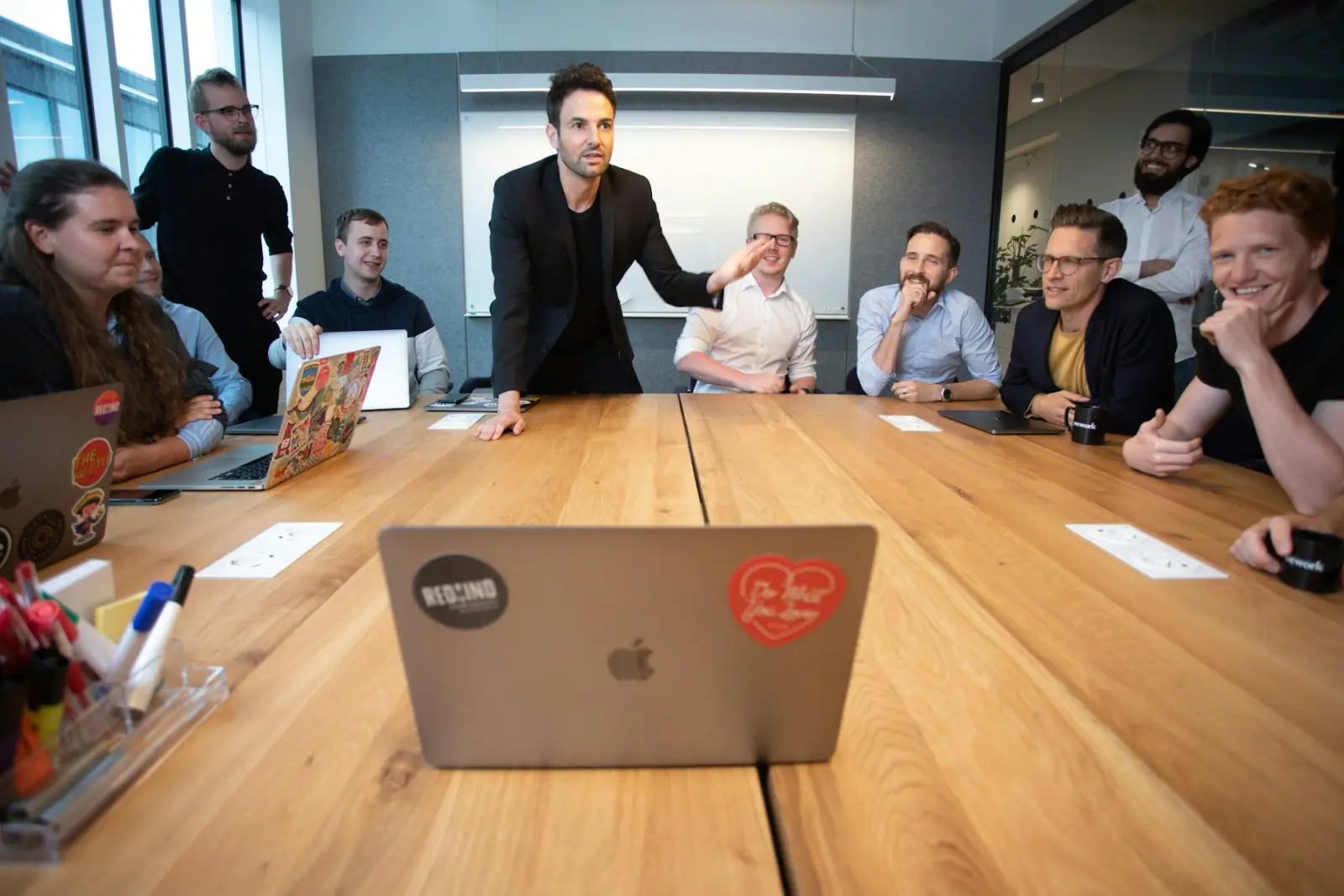
A cross-functional team meeting around a long table while one person presents
Clear roles, clear decisionsEveryone knows who owns what.
What you walk away with

An operating model your teams can run on Monday

  • Target operating model: hub, spokes or a hybrid, chosen for your organization
  • Squad design with product ownership and team makeup
  • Role profiles for key AI leadership and delivery roles
  • RACI covering strategy, delivery, operations and risk
  • Decision rights and a governance rhythm from daily to quarterly
  • Funding and intake model for new AI work
  • Talent and skills plan: hire, build or partner
  • A phased transition plan to the new model

At a glance

Typical duration
6–8 weeks
Who's involved
Executive sponsor, HR, technology, data, finance, risk and business unit leaders
Outputs
Operating model blueprint, org charts, RACI, role profiles and transition plan
Format
Current-state interviews, design workshops and a leadership sign-off
How it works

Designed with the people who'll run it

An operating model only works if people recognize themselves in it. We design it with your teams and test it against real work before anything changes.

01

Map today

Who does AI work now, how it's funded, where decisions get stuck and which skills you have in-house.

02

Choose the shape

A central hub, embedded spokes or a hybrid. We compare options against your size, culture and ambition.

03

Design the squads and roles

Product squads, shared platform and data teams, leadership roles and how they work together.

04

Set decision rights and rhythm

Who approves what, at which forum and how often, so work never waits for an ad-hoc meeting.

05

Plan the transition

A phased plan to move from today's setup to the new model, with quick wins in the first 90 days.

How the teams fit together

Product squads in the middle, everyone else connected

A typical design: business teams bring the problems and drive adoption, product squads build, and shared data and platform teams provide the foundations every squad reuses.

Business ↔ squads: ideas come in through one intake gate, and finished products go back out with a rollout plan.
Squads ↔ enabling teams: squads reuse shared data and platforms instead of rebuilding them for every product.

The leadership roles that make it work

Four roles we almost always recommend, whether you hire, grow or borrow them at first.

Program director

Owns results across the portfolio and keeps resources pointed at value.

AI product lead

Decides which ideas become products and leads the product owners.

Lead data scientist

Sets modeling standards and best practice, and keeps quality production-grade.

Enterprise architect

Keeps platforms, integrations and security choices consistent as you scale.

Governance rhythm

A simple cadence, so approvals never wait

Standing forums with clear decision rights replace ad-hoc meetings. Each level knows what it decides and what it escalates.

Quarterly

Executive steering

Direction, funding and performance against goals.

Monthly

Portfolio review

Value, cost, risk and capability progress.

Every two weeks

Delivery board

Accept new work, settle sizing and accept finished products.

Weekly

Dependency review

Progress, blockers and what the business needs to provide.

Daily

Squad stand-ups

Execution within each squad.

Illustrative example

A healthcare network where every hospital ran AI its own way

Situation
Individual hospitals and departments had their own AI vendors and pilots. Nothing was shared, risk reviews were inconsistent, and nobody owned AI at the network level.
Approach
Current-state interviews across sites, design workshops comparing hub, spoke and hybrid models, and a test of the proposed RACI against three live projects.
What they get
A hybrid model with a central AI hub and site-level champions, defined leadership roles, a single intake process, a governance cadence and a 12-month transition plan.

This is a representative scenario to show how the service works, not a description of a specific client.

FAQ

Common questions

Do we need a Center of Excellence?
Not necessarily. A central hub suits some organizations; others do better with embedded teams and a small coordinating group. We compare the options against your size, culture and ambition before recommending one.
Will this require hiring lots of new people?
Usually not at first. The talent plan shows which roles to hire, which to grow from within and which to borrow from partners while your team builds up.
How does this work with outside vendors?
The model defines what you own and what partners deliver, with clear accountability and handover points, so vendors plug into your structure rather than replacing it.
Can you help us put it into practice?
Yes. Many clients follow on with AI Factory design or an oversight retainer while the new model beds in.

Turn pilots into a team that delivers

Tell us how AI work is organized today. We'll suggest where to start.