
Approach AI Factory Services Industries About
Talk to us Take the Readiness Check
Service 02

Stop debating ideas. Start sequencing them.

We find the AI use cases across your business, score each one on the same objective measures, and turn the best into delivery waves your teams can start on.

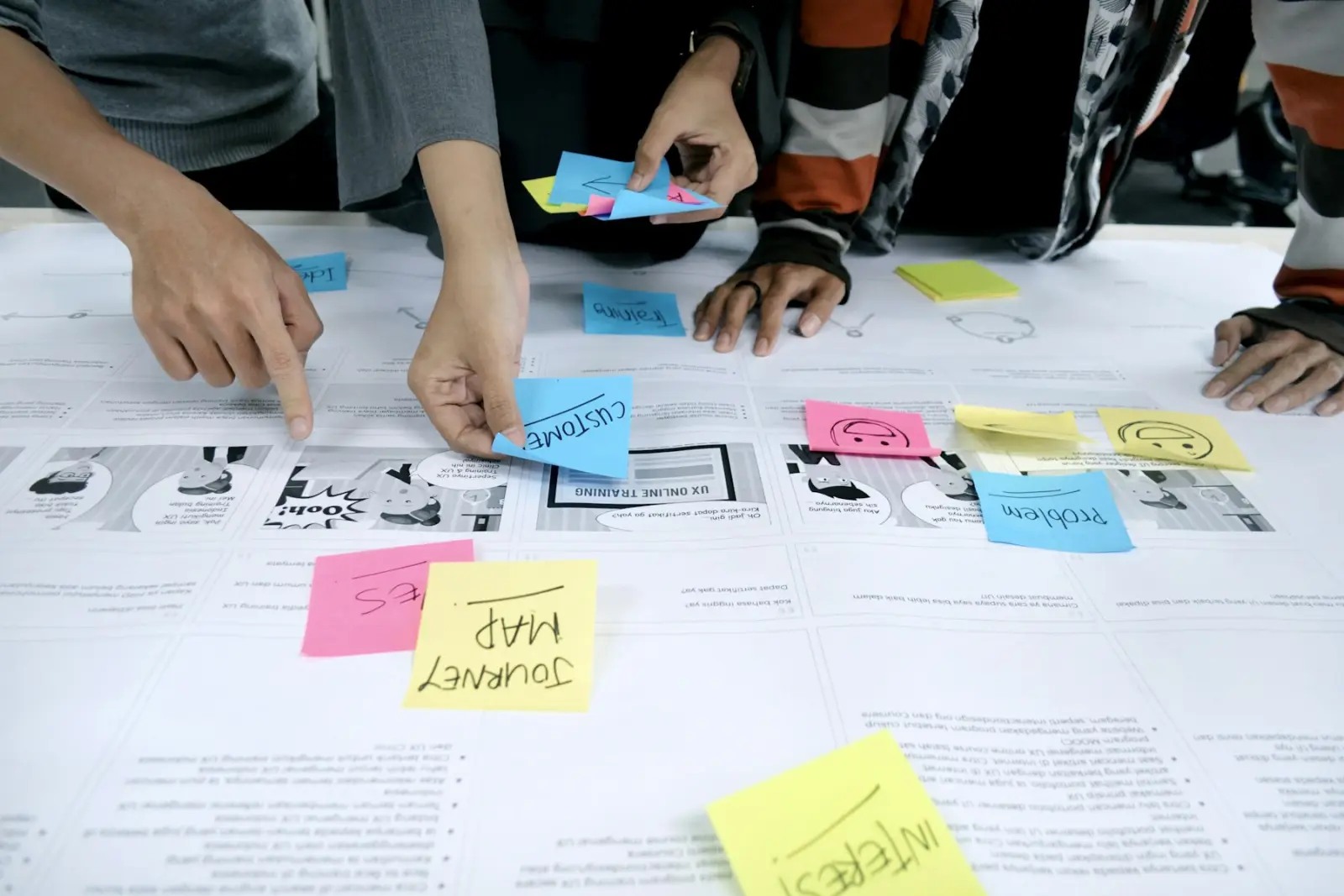
Team members arranging sticky notes on a journey map during a discovery workshop
From long list to Wave 1Every idea scored the same way.
What you walk away with

A portfolio you can defend, line by line

  • A long list of use cases gathered from across the business
  • A scoring model with agreed dimensions and weights
  • Every use case scored, with the reasoning written down
  • A value-vs-ease matrix for leadership decisions
  • Delivery waves with dependencies made visible
  • One-page cards for each Wave 1 use case
  • Data and readiness gaps to close before Wave 2
  • An intake template so new ideas are scored the same way

At a glance

Typical duration
3–5 weeks
Who's involved
Business unit leads, process owners, data and IT leads, risk
Outputs
Scored portfolio workbook, matrix, wave plan and use-case cards
Format
Discovery workshops per function, scoring sessions and a decision meeting
How it works

Three steps from ideas to delivery waves

The same method every time, so the result holds up when someone asks, "Why this one first?"

01

Score each use case

We agree the dimensions with you, such as value at stake, data readiness, technical feasibility and risk, then score every idea against them with the people who know the work.

02

Combine into one score

Dimension scores roll up into a single weighted score per use case. The weights reflect your strategy, and you can see exactly how each total was built.

03

Sequence into waves

High-value ideas you can deliver today go into Wave 1. Bigger bets follow once the data, platform and governance they need are in place.

A

Discover

Short workshops with each function to surface pain points, ideas and existing pilots.

B

Shape

Group duplicates, write a clear problem statement for each idea and note the data it needs.

C

Score and calibrate

Score together, then check the outliers so the numbers reflect reality, not enthusiasm.

D

Decide

Leadership reviews the matrix and wave plan, confirms Wave 1 and assigns owners.

See it in action

The value-vs-ease matrix

Ten sample use cases plotted by value at stake and ease of delivery. Filter by lever, then hover or tap a bubble to see its scores and suggested wave.

Illustrative
Big bets Quick wins Deprioritize Fill-ins
↑ Value at stakeEase of delivery →
Growth Efficiency Growth + efficiency Bubble size = relative impact

Pick a use case

Hover over or tap any bubble to see how it scores on value, data readiness, feasibility and risk, and which delivery wave it belongs in.

Sample use cases and scores are illustrative. In a real engagement, the dimensions and weights are agreed with you and scored with your teams.

Illustrative example

A regional retailer with 60 AI ideas and no way to choose

Situation
Every department had AI ideas, and the loudest voices were winning budget. Leadership wanted a fair, transparent way to decide what to fund first.
Approach
Discovery workshops with merchandising, supply chain, stores and customer service, followed by joint scoring on five agreed dimensions and a leadership decision session.
What they get
A scored portfolio, a Wave 1 of four use cases with named owners, a list of data gaps to close for Wave 2, and an intake template for future ideas.

This is a representative scenario to show how the service works, not a description of a specific client.

FAQ

Common questions

Do we need an AI strategy first?
It helps, but it's not required. If you don't have one, we start with a short ambition session so the scoring weights reflect what matters most to your business.
Which dimensions do you score on?
Usually value at stake, data readiness, technical feasibility, risk and strategic fit. We adjust the list and the weights with you so the model fits your priorities.
Can we keep using the scoring model after you leave?
Yes. You get the workbook and an intake template, and we train your team to run scoring for new ideas each quarter.
What if our existing pilots score badly?
That's useful to know. We'll recommend whether to scale, fix, pause or stop each pilot, with the reasoning written down.

Know exactly what to build first

Tell us how many ideas are on the table. We'll suggest a scope for scoring them in weeks, not months.